
Here’s a question every exhibitor has:
“How can we make the most of our exhibition space?”
Well, exhibition marketing is all about that brief moment when you can make a lasting impression on visitors, & showcase your brand and its offerings. But, with standard booth sizes and a constrained scope for innovation, planning exhibition booths can feel like quite a task! From optimising product placement angles to deciding visitor movement patterns, every detail counts when creating a memorable experience for the user.
What is Space-Optimised Planning?
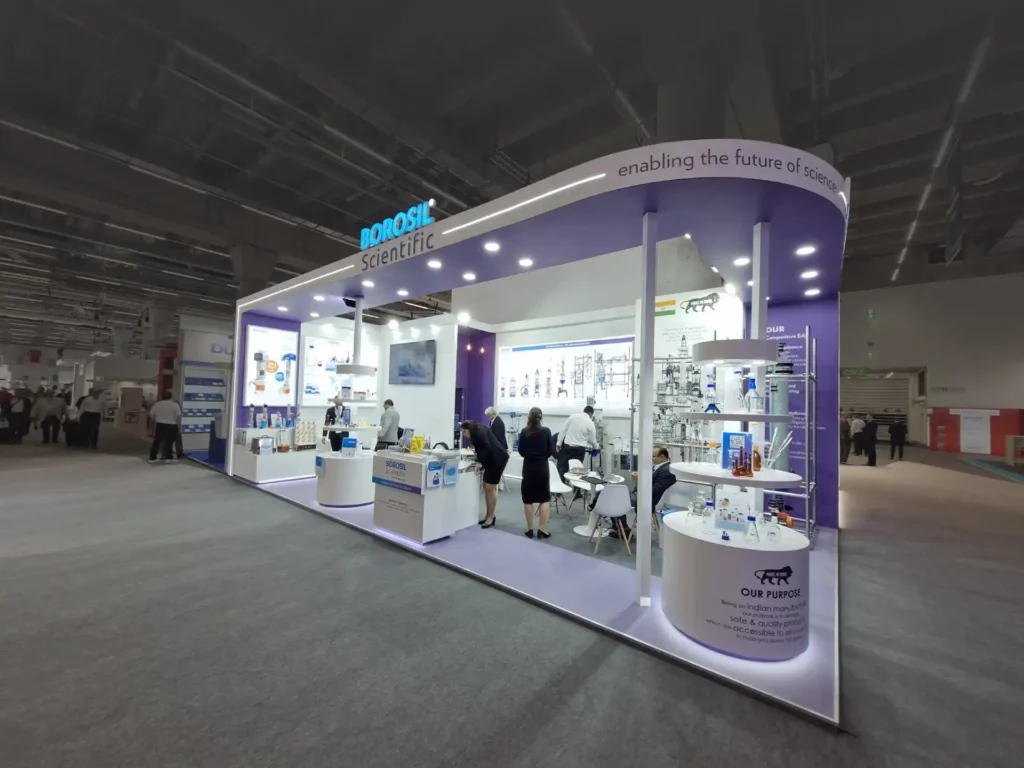
Space-optimised planning simply means designing an exhibition booth that makes efficient use of the available space while ensuring maximum engagement and functionality. So, you bring the focus on your allocated booth floor area to draw permutations and combinations for making the space feel larger and more welcoming. Factors like exhibit placement, storage area, traffic patterns, and engagement zones are important to consider. The intent is to make the booth look more roomy, aesthetic, and inviting without compromising any functional needs. This can help attract more visitors and improve your return on the exhibition investment.
How to Design Exhibition Booths for Effective Space Utilisation?
Smart space utilisation isn’t just about fitting everything in; it’s about crafting a layout that draws people in and keeps them engaged. So, let’s explore how you can achieve that:
-
Breaking the Barriers
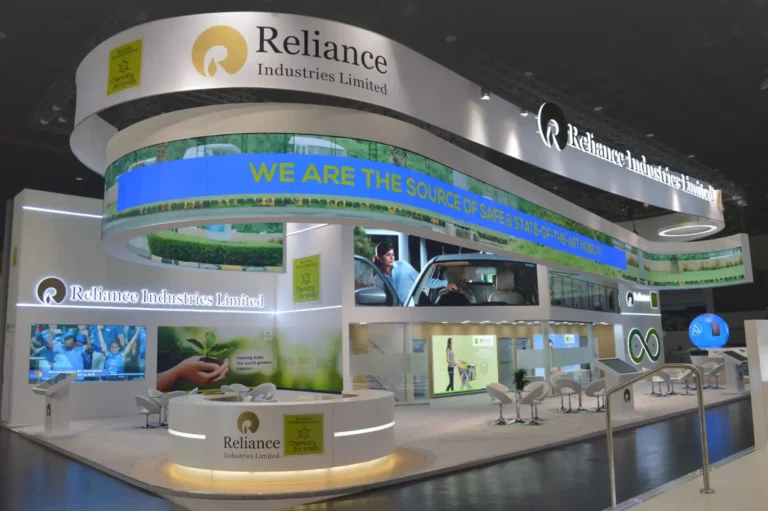
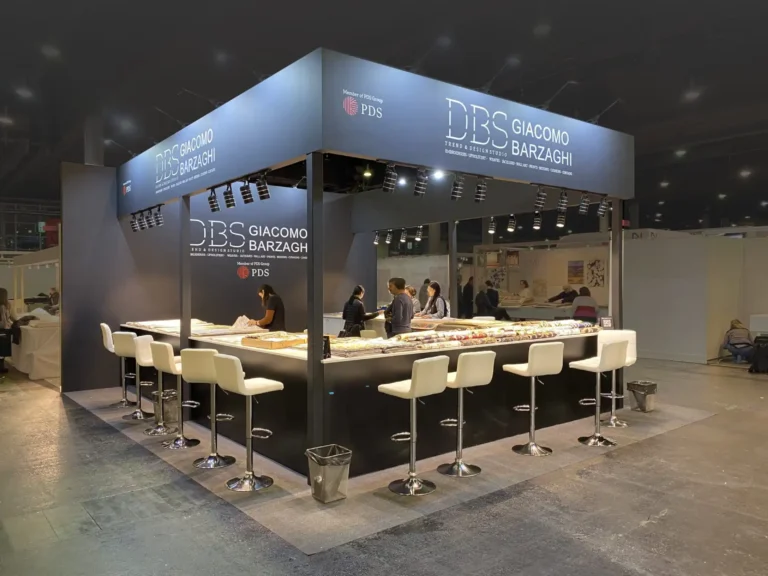
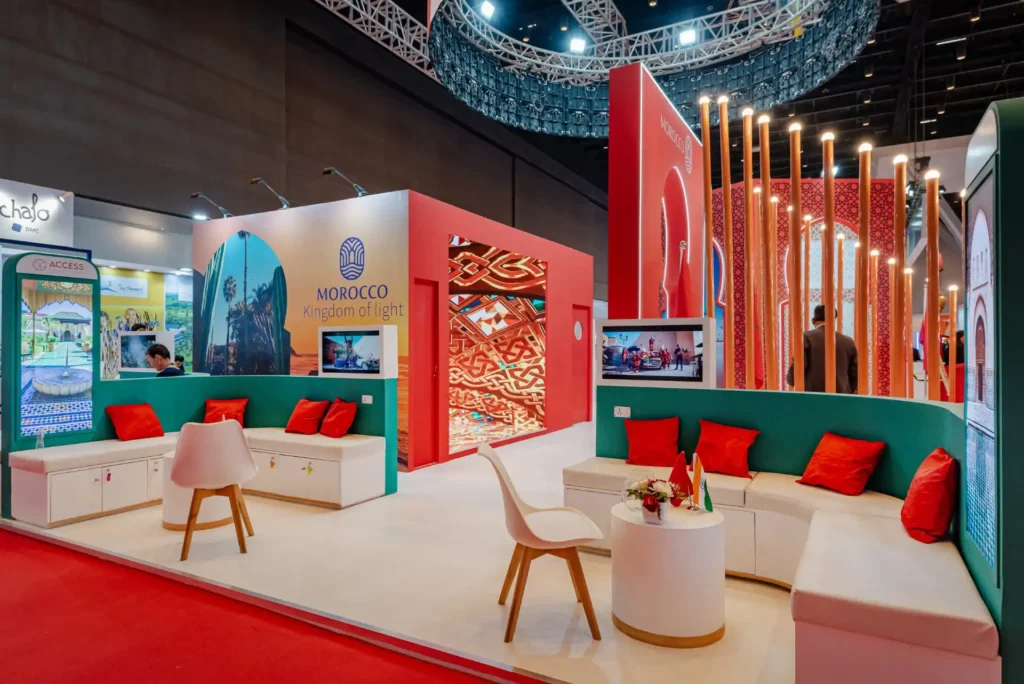
Curating the layout is the fundamental step to ensuring a clutter-free and efficient booth design. You can start by segregating zones such as engagement areas (For demos or presentations), product display areas, visitor lounges, and storage areas. Additionally, to create the illusion of a larger space, try to eliminate opaque partitions and use furniture or exhibits to create zones, thus making the booth feel bigger. For instance, using a curved sofa or open shelf can create an organic flow that encourages movement from one area to the next. Further, subtle flooring accents like textured rugs can visually separate spaces without physical barriers.
-
Going Vertical
Verticality can be an effective way to optimise limited floor space. It can help you prominently display your products as well as branding for a better recall value. You can consider using tiered shelving to keep products at various levels to ensure that all items are visible to visitors at a glance. Taking this a step ahead, your exhibits can be enhanced with suspended signage or overhead lighting fixtures to draw more attention. Look for opportunities to integrate storage within counters, benches, or podiums. A counter with sliding doors or hidden compartments can hold brochures, giveaways, or personal items while maintaining a clean look. Also, floating shelves on walls or even hanging organisers can provide storage without occupying the floor.
-
Bringing Multipurpose Furniture
When designing compact spaces, multi-purpose furniture is the most sought-after idea. It can add more purpose and style to your booth without occupying a lot of the floor area. As an example, you can have an ottoman with hidden storage that can double as seating and help keep the booth tidy. Further, using modular furniture in your booth can help adjust the furniture arrangement based on visitor footfall. Let’s say, a modular bench that can be used for small group discussions can also be split into two individual chairs during peak hours.
-
Embracing Technology
Incorporating interactive digital elements into your booth layout can create an immersive experience for your visitors while eliminating the need for bulky physical displays. For example, touchscreen displays, tablets, and Virtual Reality (VR) setups can allow you to showcase product demos, digital catalogues, or 3D walkthroughs without an elaborate physical infrastructure. You can position them on slim stands or have them wall-mounted to reduce the need for posters, shelves, or printed material- ultimately decreasing your storage needs. Such elements can also help capture attention and boost visitor engagement duration.
-
Embracing Technology
Layered lighting means having multiple sources of light in an indoor space to provide design flexibility and give an occupant more control of their built environment. Typically, there are 3 layers of lighting- ambient, task, and accent. Ambient light sets the tone of the space and is the key source of illumination. Task light supplements ambient light by drawing more focus to an activity or product. Lastly, accent light is used to emphasise a design element and add to the aesthetic value of a space. For your exhibition booth, you can start with ambient lighting to set a warm, inviting tone across the entire booth. Then add task lighting, like spotlight fixtures or LED panels to accentuate key products or graphics. Finally, you can use LED strips under shelves, lightboxes for signage or soft uplighting around displays to create a sense of depth.
“Less is more”, said the German architect Ludwig Mies van der Rohe. And, in speaking so, he emphasised the importance of quality and efficiency in spatial design. Bringing this principle to exhibition booth design- the secret to designing optimal booth layouts lies in prioritising function over form. With this strategy, your brand can maximise engagement, make a lasting impression, and make every square foot of your booth work for you.
If you want to design exhibition booths for maximum efficiency, drop us an inquiry here. Design Desk has partnered with leading corporate conglomerates across the globe, helping them create impressionable exhibition spaces. explore more of our work, here.